Week of September 28 to October 2
Slower U.S. job growth and mixed economic signals marked the end of the quarter.
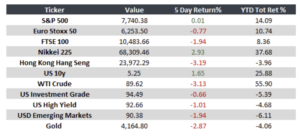
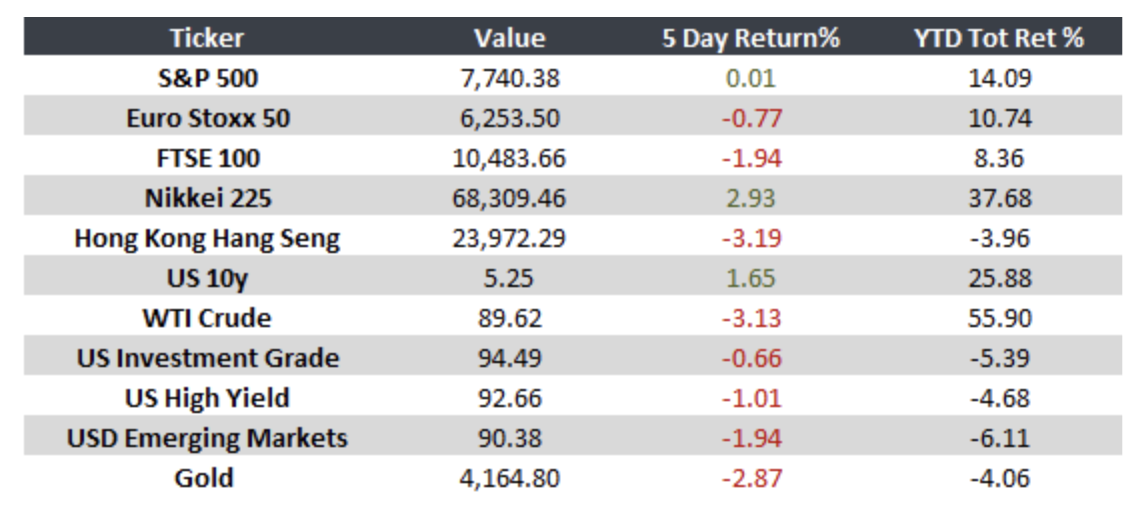
Markets ended the week focused on interest rates and new signals about global growth. U.S. job growth lost momentum, while Europe faced inflationary pressures and Asia delivered mixed economic data.
United States
- The economy added 29,000 jobs in September, below expectations, while annual PCE inflation stood at 3.4%. Markets expect the Fed to keep rates unchanged in October.
Europe
- German inflation rose to 3.3% year over year, driven by energy prices. In the U.K., GDP grew 0.5% quarter over quarter in Q2, supported by services, investment, and exports.
Japan
- The BoJ remains open to accelerating rate hikes to contain inflation. Industrial production fell 1.7% month over month in August, weighed down by the automotive sector.
China
- Industrial profits rose 4.2% year over year in August, while the manufacturing PMI returned to expansion, although employment and new orders continued to show signs of weakness.
Argentina
- The current account recorded a USD 2.214 billion surplus in Q2 2026, reversing the previous quarter’s deficit, primarily supported by a surplus in the goods balance.
Brazil
- Producer prices rose 0.36% month over month in August, their first increase since April, driven mainly by mining and food. Prices were up 2.53% year over year.
Mexico
- The Finance Ministry expects the economy to grow 1%-2% in 2026, with public debt near 56% of GDP. The peso fell to its weakest level of the year, while remittances declined 3.6% year over year in August.
“Patience is not passive; it is concentrated strength.”
— Bruce Lee
Monitor: