Infrastructure
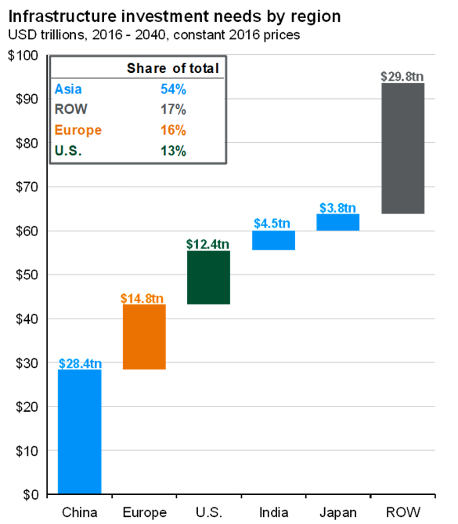
Infrastructure is one of the fastest-growing asset classes within private markets. Understanding what drives it and how it generates value is the first step in evaluating its role in a portfolio.
Fundamentals of an asset class built for the long term
Infrastructure encompasses essential assets such as energy, transportation, and digital networks, whose central characteristic is the generation of stable and predictable income over time. Unlike other asset classes, its value does not depend on short-term economic cycles, but on the structural demand for basic services.
In recent years, trends such as the energy transition and digitalization have expanded the universe of available opportunities, attracting institutional capital toward projects with long investment horizons.
However, the current environment presents important nuances: while fundraising has rebounded, it remains concentrated primarily in larger funds. Deal activity, meanwhile, faces pressure from lower transaction volumes.
Infrastructure stands out for its ability to generate predictable and resilient cash flows, even in volatile environments. However, the current landscape shows an imbalance between available capital and investment opportunities. Increased appetite for higher-risk strategies reflects an active search for yield, reinforcing the importance of manager selection and valuation discipline.
Source: JP Morgan

